
A loadout determines what weapons, equipment, and clothes a trooper takes into an operation. Making the right choices can have a significant impact on the success of the mission, so experienced troopers maintain several loadouts tailored to different tasks, environments, and climatic conditions.
The range of equipment and gear available to each class is limited by its specialization. The Trooper class has no such restrictions.
Equipment elements
Weapons
Primary Weapon
The primary weapon largely determines the trooper’s role within the squad. It is a mandatory part of every loadout.
Secondary Weapon
A compact backup weapon for emergency situations. This usually means a handgun, although some loadouts may use an SMG, compact assault rifle, or shotgun instead.
Melee Weapon
A melee weapon is used to destroy small objects or breach certain fortifications. It can also prove invaluable in close combat, should things ever come to that.

Personal Armor
Personal armor consists of helmets and body armor designed to protect the trooper’s vital areas from bullets, fragmentation, and other forms of damage.
Helmet
Helmets are designed to protect the trooper’s head from fragmentation and low-energy projectiles. A helmet is unlikely to stop a direct bullet hit, but it can partially reduce head trauma and improve the chances of survival.
Helmets are divided into standard and heavy types.
Standard helmets protect the upper part of the head, including the brain area.
Heavy helmets are additionally equipped with a ballistic visor and provide protection for the face.
Body Armor
Body armor and plate carriers are designed to protect the trooper from fragmentation, bullets, and the blast effects of explosives. Protection effectiveness primarily depends on the coverage provided by the armor plates. Body armor and plate carriers are divided into three categories: light, standard, and heavy.
Light body armor is equipped with front and rear armor plates, protecting the trooper’s chest and back.
Standard body armor adds side plates in the cummerbund, protecting the trooper’s sides as well as the chest and back. Standard body armor also provides limited fragmentation protection.
Heavy body armor uses higher-rated plates for the chest, back, and cummerbund, along with additional fragmentation-protection modules for the neck, shoulders, and groin.
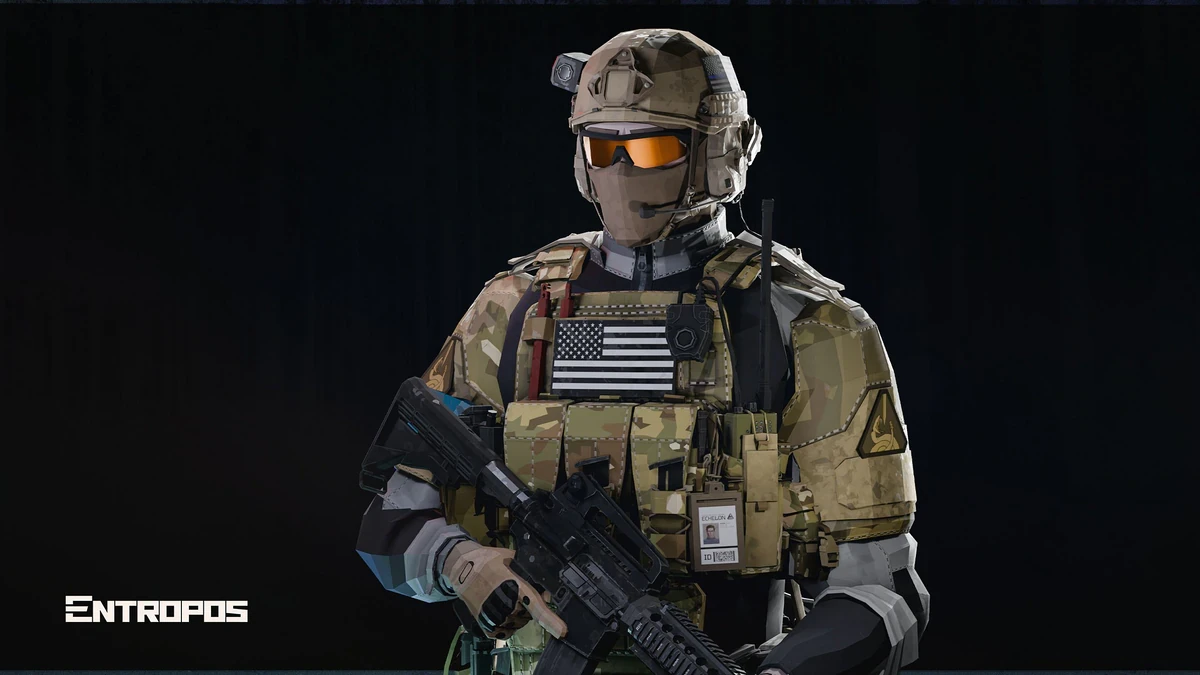
Load-Bearing System
The load-bearing system carries ammunition for the primary and secondary weapons, as well as grenades.
Load-bearing systems are divided into three categories: lightweight, standard, and extended. Their actual capacity, however, depends on the weapon type: far more light and compact magazines can be carried than machine-gun magazines or ammunition boxes.
The category and type of load-bearing system also determine how many magazines the trooper can carry for captured weapons. For example, machine-gun pouches can accommodate magazines for a captured assault rifle or submachine gun, while rifle or SMG pouches cannot hold an ammunition box for a captured machine gun.
In most cases, a modern load-bearing system takes the form of a placard or “flap” — a panel mounted on the front of a body armor vest or plate carrier, with pouches attached to it. If the armor does not support a flap panel, a traditional harness system or load-bearing vest is used instead. A flap can also be mounted on a separately worn chest rig.
Primary weapon; excluding the magazine inserted in the weapon
weapon
Load-Bearing System
None
1
3
5
7
1
2
4
6
×
1
3
4
×
×
×
1
1
2
4
5
1
2
4
5
Secondary weapon; excluding the magazine inserted in the weapon
Weapon
Load-Bearing System
None
1
1
3
4
×
1
1
2
×
1
1
2
×
1
1
2
Grenades
Load-Bearing System
None
1
1
2
2
Additional space for carried ammunition can be provided by battle belts.
Utility
Utility includes devices and tools that expand the trooper’s capabilities and define the practical role of the loadout, from assault and supply to countering enemy electronics.
Belt Utility
Belt equipment consists of compact tools and devices such as drone detectors, thermal monoculars, small breaching charges, IV kits, and similar items. It is a mandatory part of the loadout.
Back utility
Back-mounted equipment includes larger gear and devices such as electronic warfare systems, sledgehammers, drones, supply packs, and similar equipment. It is a mandatory part of the loadout.
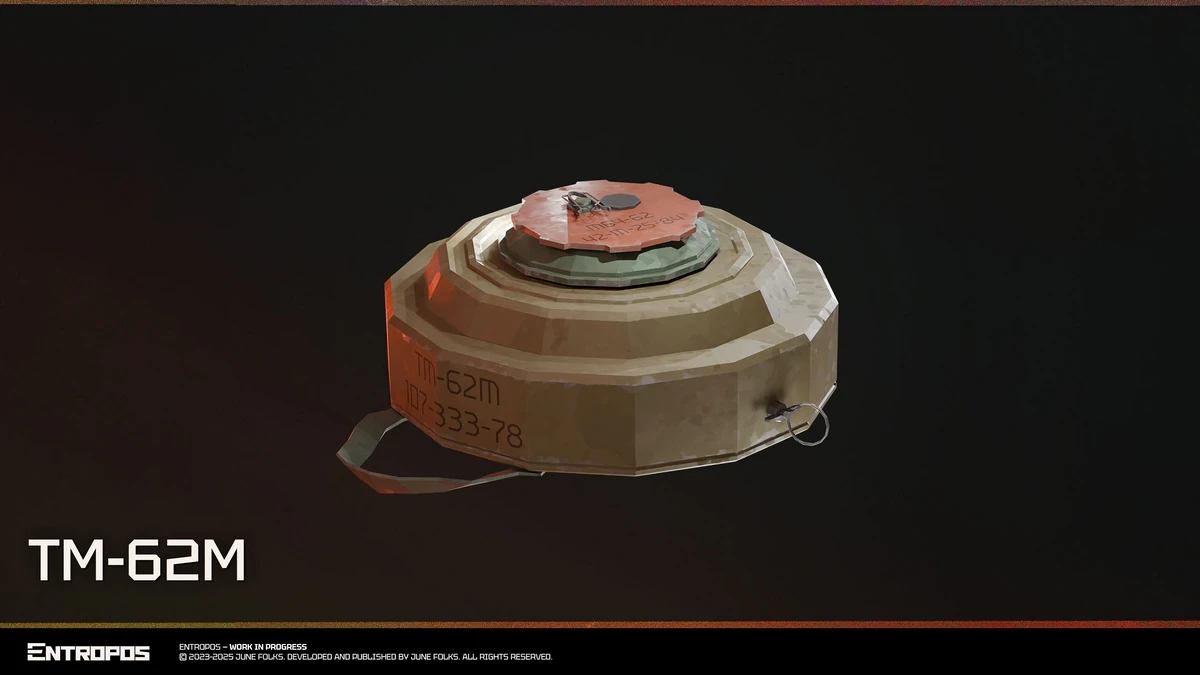
Consumables
Grenades
Grenades are expendable tools used to injure the enemy or force them to move. They are divided into lethal, tactical, and special types.
Lethal grenades:
■ Fragmentation — cause blast and fragmentation damage and disorient targets.
■ Impact — detonate on contact with a surface or after a short delay, causing blast and fragmentation damage and disorienting targets.
■ Gas — fill an area with toxic gas, forcing the enemy to leave the position quickly or put on a gas mask.
Tactical grenades:
■ Flashbangs — produce a powerful flash and loud report, disorienting the enemy for a period of time.
■ Smoke — create a smoke screen that allows the squad to maneuver; they also fill the area with irritating smoke, forcing the enemy to leave the position or use a gas mask.
■ EMP — generate a powerful electromagnetic pulse, destroying unprotected electronics or temporarily disabling electronics equipped with EMP protection.
Special:
■ Flare — produces a bright light source; used for signaling or blinding the enemy in dark interiors.
■ Chem light — illuminates an area with a soft light available in different colors; used to illuminate dark interiors.
First Aid Kit
First aid kits are used to treat bodily injuries and can also be used to revive critically wounded troopers.
The method and complexity of treatment — and therefore the time required to use the kit — depend on the nature of the injury. Treating serious wounds should, whenever possible, be done in a safer environment.
First aid kits come in standard and extended versions.
A first aid kit takes up some space in the loadout, so some troopers may choose to rely entirely on supplies and assistance from a medic. Some even consider carrying one bad luck. Still, situations may arise where the medic is unavailable and a wound must be treated immediately or a critically wounded teammate needs to be revived — and it is a serious problem if neither you nor the wounded has a first aid kit.
Gas mask
A gas mask allows the wearer to remain in clouds of toxic gas or irritating smoke without suffering respiratory damage. However, it reduces visibility and does not prevent skin irritation.
Points & weight
The amount and weight of items in a loadout are limited by supply points and total loadout weight.
A heavy loadout improves stability and self-sufficiency, but makes the trooper slower. A light loadout has less impact on mobility, but reaches the limits of available protection or ammunition sooner.
Clothing refers to garments and external apparel that do not fall under weapons, body armor, load-bearing systems, or equipment. The choice of clothing depends entirely on the preferences of the individual trooper. However, climate and terrain in the area of operations should also be taken into account.
Clothing Elements
Clothing is divided into the following categories:
Head:
■ Eyewear.
■ Headset.
■ Balaclava.
■ Neckwear: buffs, shemaghs, and similar items.
Torso:
■ Jackets, field jackets, T-shirts, polo shirts, combat shirts.
Arms:
■ Gloves.
■ Wristwear: watches, GPS devices, and similar items.
■ Tattoos.
Legs:
■ Trousers.
■ Footwear.
Climate
Clothing should match the weather: lighter clothing is more suitable for hot climates, while insulated clothing is better suited to cold conditions.
Terrain
Terrain determines which colors and contrasts are more or less noticeable. The primary purpose of clothing is to break up the trooper’s silhouette and help conceal them in a given environment by avoiding strong contrasts and large, distinct shapes that stand out against the terrain.
None
